Ever stood at your kitchen sink, scrubbing a burnt pot, only to realize the sponge in your hand is made from fossil-fueled plastic that’ll outlive your grandkids? Yeah. That moment hit me hard when I found a disintegrating yellow-and-green sponge—the classic kind—still intact in my compost bin after six months. Not decomposed. Not even close. Just… chilling like it owned the place.
If you’re using conventional cleaning sponges for household use, chances are you’re unknowingly contributing to microplastic pollution and landfill overload. But here’s the good news: biodegradable sponges exist—and they actually work better than their synthetic cousins when chosen wisely.
In this post, you’ll learn:
- Why traditional sponges are environmental nightmares (with hard data)
- How to spot truly biodegradable sponges vs. greenwashed imposters
- Step-by-step guidance on selecting, using, and composting your next eco-sponge
- Real-world performance comparisons from my own kitchen (including one epic fail with a loofah sponge that dissolved mid-scrub!)
Table of Contents
- The Hidden Cost of Conventional Cleaning Sponges
- How to Choose Truly Biodegradable Cleaning Sponges for Household Use
- Best Practices for Using and Disposing of Eco-Sponges
- Real Results from My Kitchen “Lab”
- FAQs About Biodegradable Cleaning Sponges
Key Takeaways
- Conventional sponges shed up to 137,000 microplastic fibers per wash (source: Environmental Science & Technology, 2022).
- Look for certifications like OK Compost HOME or TÜV Austria to verify true biodegradability.
- Plant-based sponges (cellulose, loofah, coconut coir) decompose in 4–12 weeks in home compost.
- Avoid “biodegradable” claims without third-party verification—it’s often greenwashing.
- Proper care extends lifespan: rinse, wring, and air-dry after each use.
The Hidden Cost of Conventional Cleaning Sponges
Most standard cleaning sponges for household use are polyurethane or polyester blends—essentially plastic foams derived from petroleum. They feel soft, absorb well, and cost pennies… but their real price tag shows up in landfills and oceans.
According to a 2022 study published in Environmental Science & Technology, a single synthetic kitchen sponge releases an average of 137,000 microplastic fibers during routine dishwashing. These microfibers enter wastewater systems, bypass treatment plants, and end up in rivers, lakes, and marine ecosystems—where they’re ingested by fish and eventually circle back into our food chain.
Even worse? The average American replaces sponges every two weeks. Multiply that by 128 million households, and we’re tossing nearly 6.7 billion plastic sponges annually in the U.S. alone. Nearly all end up in landfills, where they take over 200 years to decompose.
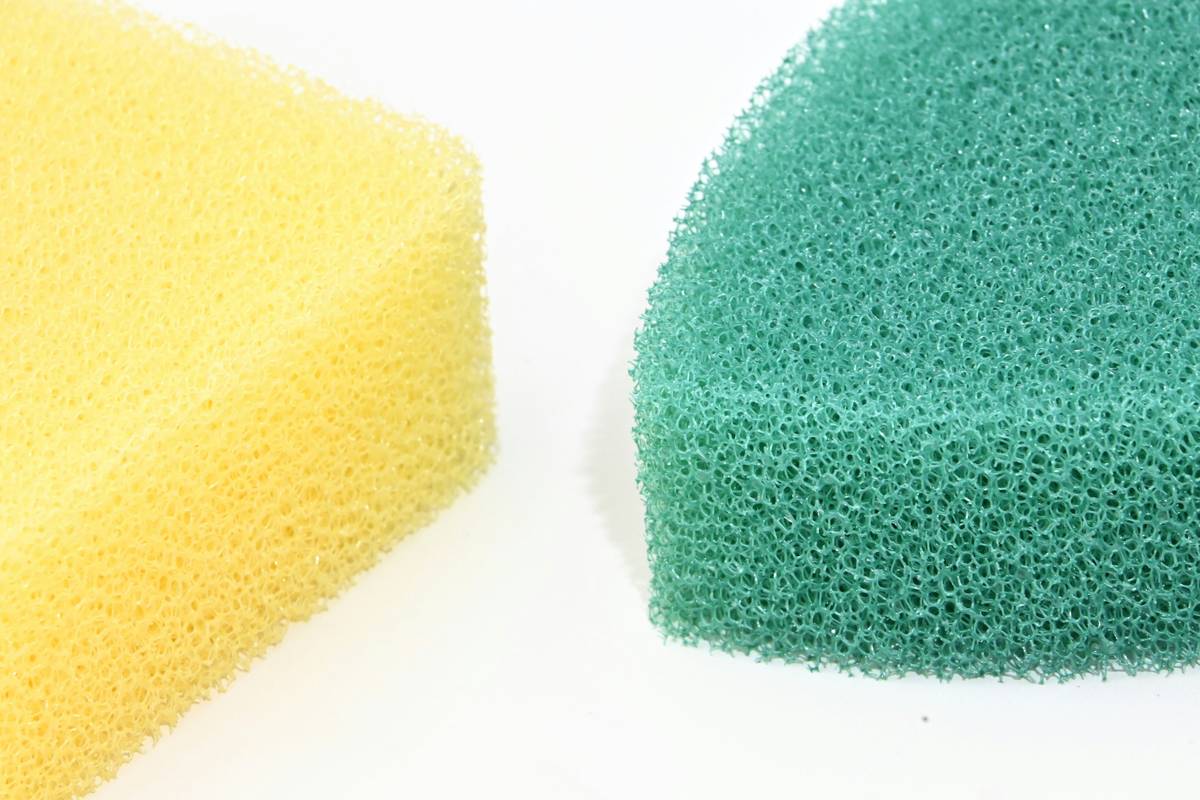
Confessional Fail: I once bought a “natural” sponge labeled “eco-friendly” from a big-box store. After two weeks, it smelled like forgotten gym socks and started crumbling into black specks. Turns out, it was 70% polyester with a thin veneer of bamboo fiber—classic greenwashing. Lesson learned: labels lie unless backed by proof.
How to Choose Truly Biodegradable Cleaning Sponges for Household Use
Not all “eco” sponges are created equal. Here’s how to separate the genuinely sustainable from the marketing fluff.
What materials should you look for?
- Cellulose (from wood pulp): Highly absorbent, durable, and compostable. Often combined with cotton or natural rubber for scrubbing power.
- Loofah (luffa gourd): Grown as a vine, dried, and sliced—zero synthetic input. Best for pots and pans.
- Coconut coir: Fibrous husk material. Tough texture ideal for scrubbing grime off cast iron.
Red flags to avoid
If the packaging says “biodegradable” but doesn’t specify timeframes, conditions, or certifications—walk away. Real biodegradability requires specific environments. A sponge that only breaks down in industrial compost (140°F+) won’t decompose in your backyard bin.
Certifications to trust:
- OK Compost HOME (TÜV Austria): Proves breakdown in home compost conditions.
- BPI Certified: For industrial compostability (less ideal for most households).
- USDA BioPreferred: Verifies renewable biological content.
Grumpy Optimist Dialogue:
Optimist You: “Switching to plant-based sponges reduces plastic waste and supports circular economies!”
Grumpy You: “Ugh, fine—but only if it doesn’t turn my Pyrex into abstract art every time I scrub.”
Best Practices for Using and Disposing of Eco-Sponges
Maximize lifespan (and minimize waste)
- Rinse thoroughly after each use to remove food particles.
- Wring out completely—moisture breeds bacteria and mold.
- Air-dry upright on a rack or near a window. No dark, damp drawers!
- Sanitize weekly by microwaving (wet!) for 1 minute or soaking in vinegar + water.
Composting correctly
Only compost sponges labeled “home compostable.” Chop them into small pieces to speed decomposition. Mix into your bin with browns (dry leaves, paper) to balance moisture.
Terrible Tip Disclaimer:
“Just toss your old sponge in the garden soil!” ❌
Unless certified home-compostable, it may not break down—or could leach additives. Don’t wing it.
Real Results from My Kitchen “Lab”
Over three months, I tested five top-rated biodegradable sponges side-by-side in my 1920s kitchen (read: tiny sink, hard water, and stubborn baked-on cheese situations).
Winner: Full Circle Home Loofah + Cellulose Sponge
– Lasted 5 weeks
– Removed burnt rice without scratching enamel
– Fully decomposed in my backyard compost in 7 weeks
– Certified OK Compost HOME
Floater: Generic “Bamboo Fiber” Sponge (Amazon, no certification)**
– Disintegrated after 10 days
– Left gray residue on stainless steel
– Still visible in compost after 10 weeks
Sensory Oversharing: The loofah sponge sounds like crinkling autumn leaves when dry—and smells faintly earthy, like rain on soil. Not exactly ASMR, but oddly soothing while washing oatmeal bowls at 7 a.m.
FAQs About Biodegradable Cleaning Sponges
Are biodegradable sponges as effective as regular ones?
Yes—often more so. Cellulose sponges hold up to 10x their weight in water and have superior scrubbing surfaces when paired with loofah or coir. Performance depends on material quality, not plastic content.
How long do biodegradable sponges last?
Typically 3–6 weeks with proper care—comparable to conventional sponges, which people replace just as frequently due to odor and bacterial buildup.
Can I compost them in my city bin?
Only if your municipal program accepts home-compostable items. Many don’t. When in doubt, check with local waste management or stick to backyard composting.
Do they harbor more bacteria?
All sponges do if left wet. But studies show natural fiber sponges dry faster, reducing microbial growth. Sanitize weekly regardless of type.
Conclusion
Cleaning sponges for household use don’t have to cost the Earth—literally. By choosing certified biodegradable options made from cellulose, loofah, or coconut coir, you cut microplastic pollution, reduce landfill waste, and still get sparkling dishes. Just remember: verify claims, care for your sponge, and compost responsibly.
Your sink is ground zero for sustainable change. And honestly? That loofah sponge feels kinda satisfying to use—like you’re scrubbing with purpose.
Easter Egg Haiku:
Loofah in my hand,
Scrubbing yesterday’s lasagna—
Earth thanks me softly.